The Goat Whisperer
First Impression: Whimsy That Stitches Well
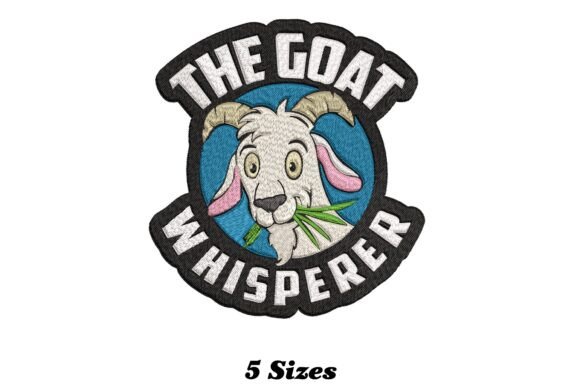
When I opened The Goat Whisperer for the first time, I didn’t just see an animal quote—I saw a mood. It’s warm, gently irreverent, and instantly recognizable as handmade. The goat isn’t cartoonish or overly stylized; it’s got soft curves, expressive eyes, and just enough detail in the fleece to read clearly at 3–4 inches tall. The lettering is friendly but legible—no tight serifs or fragile flourishes that vanish under satin stitch. This isn’t a design shouting for attention; it’s one that invites a smile, then holds it.
A Real Project Test: Embroidering a Linen Kitchen Towel
Last week, I used The Goat Whisperer on a natural linen tea towel for a local boutique’s spring collection. Why this design? Because it landed perfectly between “cute” and “crafted”—a tone that works for both farmhouse kitchens and modern apartments. I chose medium-weight cutaway stabilizer (not tear-away—linen frays too easily), matched thread colors to the goat’s coat (soft charcoal gray) and text (warm oatmeal), and stitched at 70% density to keep the fabric breathable. The result? A finished product where every curve held its shape, the goat’s ear didn’t blur into fill stitch, and the phrase “The Goat Whisperer” stayed crisp—not stiff, not fuzzy. Customers picked it up, turned it over, smiled, and asked, “Is this yours?” That’s the quiet power of a well-balanced machine embroidery design.
Where The Goat Whisperer Shines—and Where It Needs Care
The Goat Whisperer thrives on stable, medium-weight fabrics: cotton canvas for tote bags, midweight terry for towels, brushed cotton for baby onesies, and even structured twill for aprons. On sweatshirt fleece? Yes—but only with proper stabilizer underneath and slightly reduced top tension to avoid puckering. As a patch? Excellent—its clean outer edge and moderate stitch density make it peel-and-stick ready after backing.
But here’s where judgment matters: avoid using The Goat Whisperer on highly stretchy knits (like lightweight jersey) without testing first—it’s not an applique design with built-in stretch relief. On dark fabric, check contrast early: the goat’s outline and text need enough tonal separation to read without looking muddy. And skip curved surfaces like baseball caps unless you’ve confirmed the design fits comfortably within your cap hoop and doesn’t distort across the front panel.
What It Adds to Your Handmade Product—Beyond the Stitch
This isn’t just about decoration. The Goat Whisperer elevates perceived value because it feels intentional—not generic, not rushed. When customers see it on a personalized gift or small shop product, they register craftsmanship, warmth, and a subtle sense of humor. That builds trust. For Etsy sellers and craft fair vendors, it’s a quiet differentiator: no stock clipart energy, no overused font combos. It reads as *designed*, not assembled.
I’ve seen how it performs in digital spaces too. In printable mockups for social media or listings, The Goat Whisperer holds up beautifully—even in black-and-white previews—because its silhouette and spacing are strong enough to communicate without color. That’s rare in animal quotes. Most get lost in grayscale; this one stays present.
Design Notes Every Embroidery Professional Should Check
- Test before committing: Run The Goat Whisperer on scrap fabric matching your final project’s weight and texture—especially if stitching on textured weaves or blends.
- Stitch density matters: If your machine struggles with dense fills or you’re working on delicate fabric, reduce density by 5–10% rather than shrinking the design unnaturally.
- Hoop size & placement: Measure the full design width—including any subtle tail or horn extension—before hooping. Don’t crowd the edges, especially on curved items like pillow covers.
- Thread color contrast: Try the design in both light-on-dark and dark-on-light combinations. Some thread brands mute faster than others—test on your actual fabric, not just screen preview.
- Stabilizer strategy: Cutaway for woven fabrics, lightweight fusible for knits, and tear-away only if your fabric won’t fray. Skip the “no stabilizer” experiment—this design has enough detail to suffer without support.
- Licensing clarity: Since The Goat Whisperer is listed as a machine embroidery design for commercial use, confirm whether resale of finished products or redistribution of the digital embroidery file is permitted. Small shop owners and Etsy sellers need that certainty before listing.
Fit for Purpose: Who Should Reach for This Design?
If you’re a craft business owner building a cohesive line of nursery decor, The Goat Whisperer fits right in—gentle enough for baby blankets, playful enough for toddler pillow covers. For apparel decorators, it’s a smart addition to custom sweatshirt embroidery for farm-to-table cafes or agritourism brands. Holiday embroidery? Surprisingly effective on rustic Christmas stockings or embroidered gift tags—its charm reads year-round, not seasonally trapped.
Hobbyists love it for personalized gifts (“The Goat Whisperer” on a child’s backpack, a gardener’s apron, or a friend’s favorite mug cozy). And for digital product sellers? It’s a solid anchor in an Animal Quotes bundle—distinctive, versatile, and commercially viable without leaning on trends that fade by next season.
Final Thought: A Design That Feels Like a Conversation
Not all embroidery files earn their place in your working library. The Goat Whisperer does—not because it’s flashy, but because it stitches cleanly, communicates clearly, and carries personality without demanding attention. It doesn’t ask you to fix it in post-production. It doesn’t require special hoops, exotic threads, or endless test runs. It just… works. And in real-world embroidery projects—whether you’re stitching one tote bag or scaling to 200 holiday towels—that reliability is everything.