Charming Pansy Blossom
A Designer’s First Glance: Cheerful, Not Cutesy
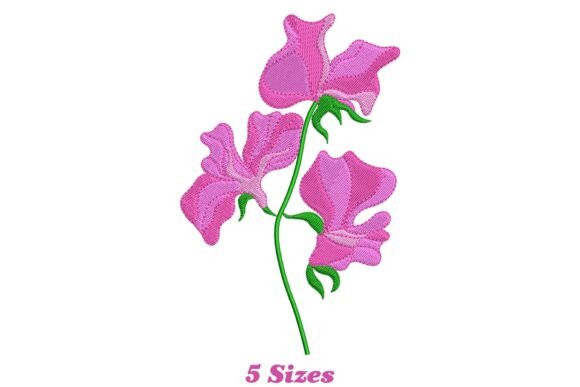
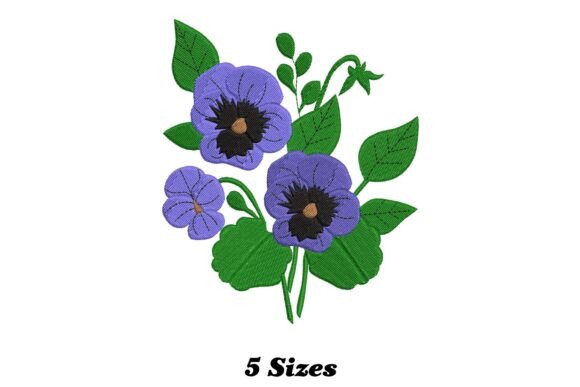
When I opened Charming Pansy Blossom, I didn’t see just another floral motif—I saw a quiet confidence in its shape. It’s not overly fussy or symmetrical like many single-flower embroidery files; instead, it leans slightly, with petals that curl with gentle asymmetry and a subtle nod to botanical realism. The center has soft dimension—not heavy satin stitch, but layered fill stitches that suggest depth without density. It reads as cheerful, yes, but also grounded—artistic without trying too hard. That balance matters when you’re stitching for real people who’ll hold, wear, or gift the finished product.
Real-World Test: A Linen Tea Towel for My Local Boutique
Last week, I used Charming Pansy Blossom on a batch of heavyweight linen tea towels for a small shop launch. No mockups, no filters—just needle, thread, and fabric under natural light. The design landed beautifully at 3.2 inches wide: large enough to read clearly, small enough to leave breathing room on the towel’s corner. Customers responded immediately—not just “oh, it’s pretty,” but “I can tell someone *made* this.” That handmade product warmth? It came from how the petals softened at the edges, how the stem curved naturally into the fabric grain, and how the stitch density avoided that plasticky, overfilled look common in low-res embroidery files.
Where It Shines (and Where It Asks for Thought)
Charming Pansy Blossom thrives in contexts where personality meets practicality:
- Custom apparel: Works cleanly on cotton sweatshirts and structured tote bags—especially when placed off-center or along a seam for visual interest.
- Baby embroidery: Its rounded forms and lack of sharp angles make it ideal for onesies and burp cloths, provided you use soft stabilizer and test on scrap first.
- Holiday embroidery & personalized gifts: Paired with a simple monogram or stitched onto a linen pillow cover, it adds quiet elegance—not seasonal clutter.
- Etsy seller & craft fair appeal: Buyers consistently choose pieces with botanical charm over generic florals. This design feels intentional, not algorithmic.
But—and this is where experience kicks in—Charming Pansy Blossom isn’t a one-size-fits-all solution. Use caution on:
- Thin or stretchy fabric: The petal edges rely on clean stitch definition. On lightweight jersey or slinky rayon, stabilizer choice becomes non-negotiable—not optional.
- Curved surfaces (caps, baby hats): The slight asymmetry that gives it life can distort if hooped too tightly or stitched without proper cap framing.
- Dark fabric backgrounds: Some thread colors—especially pale yellows or creams in the center—lose contrast unless tested in black-and-white mockups first.
- Small hoop sizes (under 4x4"): The design fits, but fine petal tips may compress. Always inspect stitch paths before committing to production runs.
Design Integrity Meets Commercial Sense
As a designer who licenses embroidery files and sells finished goods, I pay attention to what Charming Pansy Blossom communicates about professionalism—not just in execution, but in intent. It avoids over-engineered details (no tiny veins, no micro-stitching) that break down on mid-tier machines or fade after three washes. Instead, it trusts the satin stitch to define petal curves and lets fill stitch breathe in the center. That restraint translates directly to customer trust: your buyer sees a finished product that looks thoughtfully made, not digitally mass-produced.
For Etsy sellers and small shop owners, that distinction affects pricing power. A $28 embroidered apron with Charming Pansy Blossom feels worth the premium because the design supports the story—“handmade with care,” not “embroidered fast.” And for digital product sellers? This is exactly the kind of embroidery file buyers add to cart *after* checking your other Single Flowers—because it complements, rather than competes with, your existing collection.
Practical Designer Notes You’ll Actually Use
Before stitching Charming Pansy Blossom into your next project, run through these quietly essential checks:
- Test on scrap fabric—not just the same fiber, but the same weight and finish as your final piece.
- Review stitch density in your embroidery software. If it’s over 12,000 stitches, consider simplifying inner layers for delicate fabrics.
- Confirm hoop size compatibility—especially if layering with text or other motifs. This design flows well with minimal spacing, but crowding kills its charm.
- Inspect small details at 200% zoom: petal tips, stem taper, and center texture should all resolve cleanly.
- Check thread color contrast across light and dark backgrounds. What reads softly on ivory may vanish on navy.
- Use appropriate stabilizer: medium-cutaway for knits, tear-away for stable wovens, and always baste first on textured fabrics like terry cloth or bouclé.
- Verify licensing terms before selling finished items or bundling the embroidery file commercially—this is a machine embroidery design meant for real-world use, not just personal practice.
Final Thought: It’s Not Just a Flower—It’s a Tone Setter
In my studio, Charming Pansy Blossom doesn’t sit in the “floral filler” folder. It lives in the “mood anchor” section—alongside designs that quietly elevate an entire product line. Whether stitched on a kitchen towel for a wedding gift, embroidered on a child’s backpack, or scaled up for a boutique pillow cover, it brings consistency without repetition. It’s the kind of embroidery file that makes customers pause, smile, and say, “I want *that* version”—not just any pansy, but this one. Because in handmade work, specificity is sincerity. And sincerity, well—that never goes out of style.