I Tolerate You
First Impression: Witty, Warm, and Instantly Relatable
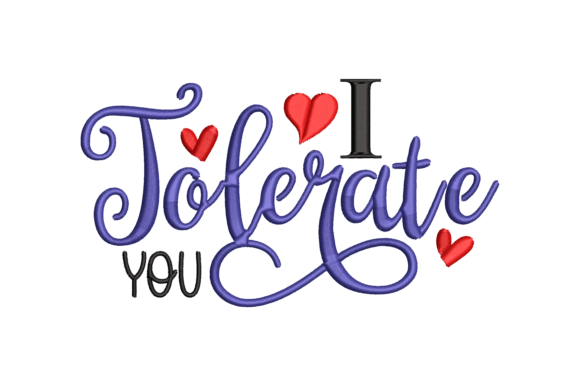
As an embroidery designer who’s prepped over 200 craft fair booths, I can tell you I Tolerate You lands with a grin—not a groan. It’s not sarcastic edge for edge’s sake; it’s affectionate irony wrapped in clean, confident lettering. Think “family quote” done right: warm but not cloying, funny but not crass, modern but not sterile. It leans into farmhouse charm and contemporary wit equally—perfect for handmade markets where shoppers want personality *and* polish. It doesn’t scream “look at me!”—it whispers, “Yeah, we’ve all been there,” and pulls people in.
Where It Shines: Craft Fair Product Placement That Converts
In my booth setup—tote bags front-and-center, aprons draped over a ladder shelf, tea towels folded beside embroidered pouches—I Tolerate You performs strongest on pieces that invite pause and personal connection:
- Tote bag design: Centered on the front panel of a natural canvas or oatmeal linen tote, it reads clearly from 6 feet away. The phrase has rhythm and weight—ideal for high-visibility, repeatable craft fair product use.
- Apron embroidery: Positioned just above the pocket (not too low, not too high), it adds levity to a functional item without compromising utility. Works especially well on unbleached cotton or denim aprons.
- Tea towel embroidery: On a soft, textured flour-sack towel, the contrast between gentle fabric and bold sentiment creates quiet charm. Avoid dense stitch areas near hems—keep it light and legible.
- Embroidered patch: This is where I Tolerate You becomes a small-shop powerhouse. Sized at 3–4 inches wide, it’s instantly wearable, giftable, and scalable for batch production. Great for Etsy sellers bundling patches with iron-on instructions.
- Pillow cover & fabric pouch: As a focal point on a neutral linen pillow or drawstring pouch, it elevates the handmade product from “cute” to “curated.” Just ensure spacing around letters stays generous—crowded stitching loses readability on curved seams.
What Holds It Back (And How to Fix It)
I Tolerate You isn’t foolproof—and that’s why testing matters. Here’s what I watch for:
- Small lettering on dark fabric: The “you” at the end risks disappearing on navy, charcoal, or black fabrics unless thread contrast is strong (e.g., bright white or pale yellow thread). Always test on your target fabric first.
- Curved surfaces: On caps or rounded market bags, letter spacing can distort. If using this as a cap embroidery, confirm the machine embroidery design includes proper curve compensation—or opt for a simplified layout.
- Fabric texture vs. stitch density: On heavily textured tea towels or burlap, avoid tight fills or fine serifs. Stick to clean, sans-serif outlines and moderate stitch density so the phrase stays crisp, not muddy.
- Scale limitations: Below 2.5 inches wide, “I Tolerate You” starts losing impact—especially the subtle space between words. It’s not a tiny accent; it’s a statement. Respect its size.
Real-World Production Notes Every Embroidery Designer Should Follow
Before cutting fabric or loading hoops, run these checks:
- Test the digital embroidery file on scrap fabric matching your final product—same weight, same weave, same dye lot if possible.
- Verify thread colors against your fabric swatches—not your screen. What looks vibrant on a monitor may dull on oatmeal linen.
- Review letter spacing and kerning. Tight tracking works on paper; on fabric, it invites thread nesting and skipped stitches.
- Confirm hoop size compatibility. If your machine embroidery design requires a 5x7 hoop but you’re stitching on narrow apron straps, you’ll need a repositioned version—or a new layout.
- Inspect stitch density. Overly dense fills on lightweight cotton cause puckering. Lighten underlay and reduce fill density by 10–15% for breathable fabrics.
- Use the right stabilizer: tear-away for stable wovens, cut-away for knits, and heavy cut-away + topping for textured towels.
- Create at least one real mockup—not just a printable mockup. Drape it, hold it, photograph it in natural light. Does it look handmade, not mass-produced? Does it feel intentional?
- Compare across fabric colors. A single file may need minor tweaks for cream vs. slate vs. terracotta.
- Confirm commercial licensing status before selling finished products. If this is a digital embroidery file you purchased, check whether resale of physical items is permitted—many Family Quotes designs require extended licenses for commercial embroidery.
Why It Works for Your Handmade Business
I Tolerate You strengthens booth display strength because it balances humor and heart—no niche alienation, no generational misfire. Grandparents chuckle. Teens snap photos. New parents buy two: one for themselves, one for their sibling. It supports brand consistency when paired with other thoughtful Family Quotes—think “I Love You More Than Coffee” or “Home Is Where the Wi-Fi Connects Automatically”—but stands alone with confidence.
It boosts buyer engagement: people touch it, quote it aloud, tag friends. That’s foot traffic converted. And because it’s text-based—not illustration-heavy—it photographs beautifully for Etsy listings and Instagram Stories. No complex shadows or color grading needed. Natural light, clean background, one well-stitched sample: done.
Most importantly, it feels repeatable. You can produce 50 embroidered patches in a weekend without creative fatigue. You can adapt it across seasons—swap thread colors for spring pastels or holiday burgundy—and keep the core sentiment intact. That repeatability is gold for small shop product lines, Cricut crafters adding embroidery layers, and boutique makers building signature collections.
Final Thought: A Design That Earns Its Place
This isn’t just another machine embroidery design. I Tolerate You earns its spot on your embroidery hoop, your craft fair table, and your customer’s shelf—not because it’s trendy, but because it’s true. It respects the craft, serves the customer, and scales with your business. Just remember: great embroidery starts with respect—for the fabric, the thread, the time, and the person who’ll carry that tote bag, wear that apron, or gift that pillow cover home. Test it. Refine it. Then let it do what it does best: connect.