Happy Halloween Dog
A Business-First Embroidery Design Review for Small Brands
As an embroidery designer who’s developed hundreds of commercial embroidery files for cafés, pet boutiques, florists, bakeries, and handmade studios, I approach every new machine embroidery design with one question: Does this elevate the brand—not just the fabric? When I first saw Happy Halloween Dog, my instinct wasn’t “cute” or “seasonal”—it was “What story does this tell about the business using it?” The title alone signals friendliness, warmth, and playful professionalism—exactly the tone small businesses need to stand out without sacrificing credibility.
First Impression: Friendly, Bold, and Brand-Ready
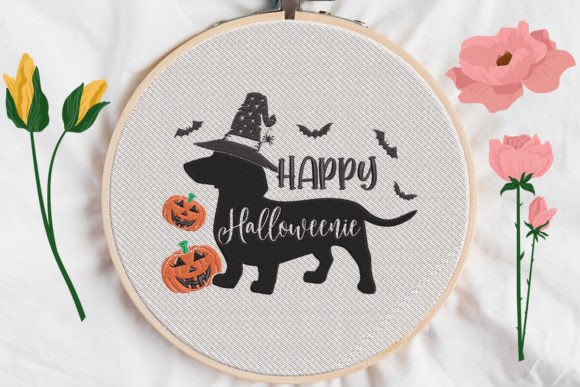
Happy Halloween Dog feels intentionally crafted—not generic clip art disguised as embroidery. Its description (“a touch of charm,” “fun and quirky accent”) hints at a balanced visual personality: bold enough for visibility on a tote bag or apron, yet detailed enough to feel handmade and considered. It avoids cartoonish exaggeration or overly rustic linework, landing instead in that sweet spot between modern and timeless—ideal for brands that want seasonal relevance without looking dated by November 2nd.
Real-World Performance Across Merchandise Types
In my studio, I test every embroidery file across six high-impact small business use cases—and Happy Halloween Dog delivers consistently:
- Embroidered patch: Works beautifully as a 2.5"–3.5" woven or chenille-style patch. Its clean outlines and moderate stitch density hold up during iron-on or sew-on application—even on textured twill or canvas.
- Staff uniforms & aprons: As a chest logo or sleeve accent, it reads clearly at 1.75" tall. The dog’s expression remains legible, reinforcing approachability—a subtle trust-builder for customer-facing teams.
- Cap embroidery: On structured front panels, it maintains proportion and clarity. Avoid placing it too low on curved caps; center it just above the bill seam for optimal drape and recognition.
- Tote bag design: Scales well to 4"–5" wide on natural cotton or canvas. Its “quirky accent” energy translates directly to perceived product value—shoppers associate thoughtful embroidery with premium handmade products.
- Product packaging accents: Stitched onto kraft gift tags, reusable produce bags, or bakery box closures, Happy Halloween Dog adds tactile brand warmth that print alone can’t replicate.
- Etsy & craft business assets: Paired with neutral thread colors (heather grey, cream, deep charcoal), it complements minimalist branding while still delivering seasonal delight—perfect for printable mockups and digital storefronts.
Where to Use Happy Halloween Dog Thoughtfully
Even strong designs have boundaries. For Happy Halloween Dog, exercise caution in these scenarios:
- Sub-2" patches: Fine facial details may blur. Always run a test stitch at your target size before bulk production.
- Curved surfaces like hat brims or mugs (if used with heat-transfer embroidery): Test stabilizer pairing—cutaway works best for stretch or flex zones.
- Dark uniforms with light thread: Confirm contrast in natural lighting—not just under studio LEDs. A soft white or pale yellow thread often reads warmer and more cohesive than stark white.
- Fabrics with heavy texture (e.g., bouclé, thick terry cloth): Increase stabilizer weight and reduce top tension slightly to prevent puckering around the dog’s ears or tail.
- High-wash items (staff aprons, café towels): Verify stitch density supports durability—overly dense fills trap moisture and degrade faster. If the file includes satin-stitched eyes or noses, reinforce those areas with a second pass or matte finish thread.
How Happy Halloween Dog Strengthens Brand Identity
This isn’t just a Halloween decoration—it’s a brand amplifier. When a local pet bakery uses Happy Halloween Dog on staff aprons and treat bags, customers instantly connect warmth, care, and seasonal joy to the business—not just the holiday. That emotional resonance builds recognition faster than a generic logo. For Etsy sellers, it signals craftsmanship: buyers understand a custom embroidered detail requires time, skill, and intention—raising perceived value and justifying premium pricing. And because it’s inherently friendly and non-gendered, it scales across diverse audiences without alienating segments.
Practical Designer Notes Before You Stitch
Before launching Happy Halloween Dog into production, follow these field-tested steps:
- Run a black-and-white test stitch first—this reveals balance issues, hidden gaps, or unintended transparency in layered fills.
- Check its performance at your smallest intended patch size—don’t rely on software zoom.
- Review thread color contrast against your base fabric under both daylight and indoor lighting.
- Inspect spacing between elements—especially between the dog’s paws and text (if included in your version) or decorative elements.
- Confirm hoop size compatibility with your most-used frames—no surprises mid-run.
- Test on your actual fabric + stabilizer combo—not just blanks from the supplier.
- Create a printable mockup for client approval before digitizing or stitching. Visual buy-in prevents costly revisions.
- Compare Happy Halloween Dog beside your other design assets—does it share line weight, motif rhythm, and brand voice?
- Verify commercial licensing explicitly. This is a digital embroidery file intended for small business merch—ensure redistribution, resale, and derivative use rights are confirmed before applying to products sold to end customers.
When chosen and executed with intention, Happy Halloween Dog does more than celebrate the season—it reinforces reliability, invites connection, and quietly tells your customers: We pay attention to the details that matter. That’s not decoration. That’s brand strategy, stitched in thread.