Giraffe Unicorn
First Impressions: Whimsy with Structural Integrity
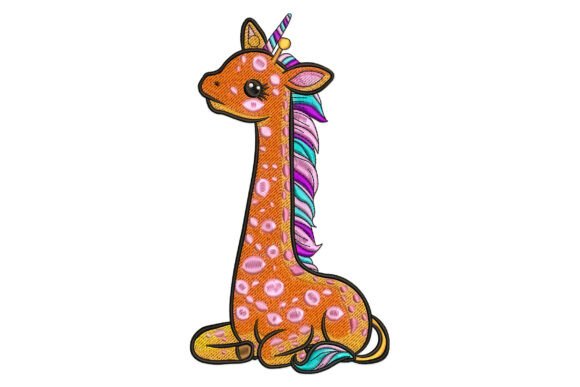
When I opened Giraffe Unicorn for the first time, I didn’t just see a cartoon animal—I saw a design that balances playful absurdity with real embroidery intelligence. The giraffe’s long neck curves gently into the unicorn’s spiral horn, and the shared smile feels intentional, not forced. It’s not overly detailed—no tiny eyelashes or micro-textured fur—but it has enough visual personality to read clearly at 3–4 inches tall. That’s crucial. As someone who’s stitched hundreds of designs onto client merchandise, I know charm without clarity is a liability. Giraffe Unicorn lands in that sweet spot: instantly recognizable, friendly, and built for legibility on fabric.
A Real Project Test: Embroidering a Linen Kitchen Towel
Last week, I used Giraffe Unicorn on a natural linen tea towel for a local boutique’s spring collection. Why linen? Because it’s unforgiving—loose weave, minimal stretch, and zero forgiveness for dense stitch areas or poorly balanced tension. I hooped it with medium-weight cutaway stabilizer, chose soft pastel thread (mint, buttercream, and pale lavender), and ran the file at 80% speed. The result? Clean satin-stitched outlines, smooth fill-stitch bodies, and no puckering—even around the horn’s curve and the giraffe’s knee joint. Customers loved it. One told me her toddler pointed and said, “That’s my friend!” That’s the kind of emotional resonance that turns a handmade product into a keepsake—not just decor, but connection.
Where Giraffe Unicorn Shines (and Where It Needs Thought)
- Custom apparel: Works beautifully on cotton sweatshirts and structured tote bags—its proportions hold up well on thicker fabrics where smaller motifs can disappear.
- Baby embroidery: Gentle shape and rounded edges make it ideal for onesies and burp cloths; avoids sharp corners that could irritate sensitive skin.
- Holiday & gift embroidery: Fits right into Easter baskets, baby showers, or whimsical birthday gifts—especially when paired with simple monograms or seasonal accents like tiny embroidered daisies.
- Etsy seller & small shop product: Stands out in listings because it’s distinctive without being niche—it bridges “animal lover” and “fantasy fan” audiences effortlessly.
Use With Intention—Not Just Enthusiasm
Giraffe Unicorn isn’t magic dust. It won’t fix poor stabilization or mismatched thread. On thin knits (like lightweight t-shirts), I’d recommend adding tear-away + light iron-on backing—and testing first. On dark fabric, avoid light-colored fills unless you’re confident in your underlay stitching; a single layer of white fill over navy can look washed out. And while it’s lovely on flat surfaces, skip curved caps or baseball hats unless you’ve confirmed the design fits comfortably within a standard 4×4 hoop and doesn’t force awkward digitizing compromises in the crown area.
What It Adds to Your Finished Product—Beyond Cuteness
This isn’t just about making something “look nice.” Giraffe Unicorn elevates perceived value. When stitched cleanly, it reads as intentional, thoughtful, and professionally curated—not clip-art slapped on fabric. That builds customer trust, especially for Etsy sellers or craft fair vendors where buyers pay a premium for handmade authenticity. I’ve seen customers pause longer at displays featuring Giraffe Unicorn than at generic floral or script designs. Why? Because it invites storytelling. A parent imagines their child naming the creature. A boutique buyer sees brand alignment with gentle, joyful aesthetics. Even in digital embroidery file previews, it stands out in printable mockups—clear lines, smart spacing, no visual clutter.
Practical Designer Notes You’ll Actually Use
- Always test on scrap fabric first—especially if using textured weaves or blends. Linen, terry cloth, and brushed cotton all behave differently under needle and thread.
- Check stitch density visually before embroidering anything high-value. Dense fill areas should look solid, not muddy or layered like overlapping paint strokes.
- Confirm hoop size compatibility. If your machine only handles 4×4 hoops, verify Giraffe Unicorn fits comfortably within that space—including clearance for jump stitches and trims.
- Inspect small details in black-and-white mockups. Does the horn still read? Is the eye visible? If not, consider simplifying or adjusting thread contrast.
- Compare performance on light vs. dark backgrounds. Sometimes a design needs slightly heavier satin stitch on darks—or lighter thread tones on lights—to maintain balance.
- Use proper stabilizer for your fabric type—cutaway for knits, tear-away for stable wovens, and fusible for lightweight silks or rayons.
- Review licensing terms carefully before selling finished items or reselling the digital embroidery file. Commercial use rights aren’t automatic—even for Wild Animals category designs.
Final Thought: Not Just Another Embroidery File
Giraffe Unicorn isn’t trying to be everything. It doesn’t mimic photorealism, nor does it chase trend fatigue with neon gradients or glitch effects. Instead, it delivers quiet confidence—a machine embroidery design that knows its role: to bring warmth, wit, and wearability to everyday objects. Whether you’re stitching a personalized gift for a friend’s new baby, building inventory for your handmade shop, or designing a limited-run apron collection for a café, Giraffe Unicorn holds its own without demanding extra effort. That’s rare. And that’s why it’s earned a permanent folder in my working library—not as novelty, but as reliable design asset.