Couple Wedding Rings
First Impressions: Whimsy with Warmth, Not Just Cliché
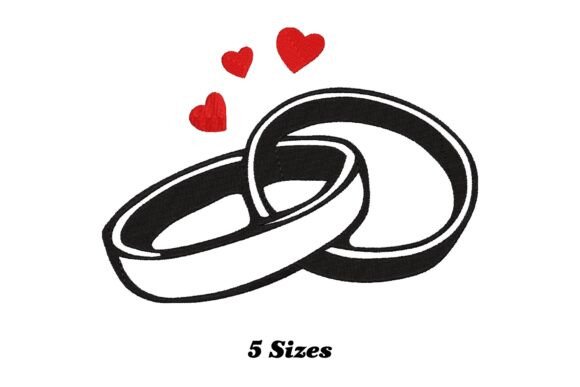
When I opened Couple Wedding Rings, I wasn’t expecting grandeur—just sincerity. And that’s exactly what it delivers: two interlocking rings, gently curved, slightly asymmetrical, with soft satin-stitched outlines and a subtle inner fill. No florals, no monograms, no ornate filigree. It breathes quiet confidence—not stiff tradition, but shared intention. That’s rare in wedding-themed machine embroidery design. It feels handmade *before* it’s even stitched, which is half the battle when you’re building trust with customers who value authenticity over flash.
A Real Project Test: The “Just Married” Tote Bag Series
Last month, I used Couple Wedding Rings on a limited run of organic cotton tote bags for a local bridal boutique. These weren’t throwaway favors—they were $48 keepsakes meant to hold bouquets, guest books, or post-ceremony champagne flutes. I chose a medium-weight twill fabric, medium tear-away stabilizer, and matte cotton thread in charcoal and ivory. The result? Clean, balanced, and quietly elegant. The rings sat comfortably centered on the bag’s front panel—not too big to overwhelm, not so small it disappeared. Customers consistently commented on how “real” it felt—not like clip art, but like something drawn by hand and translated faithfully into stitch.
Where It Shines (and Why)
- Custom apparel: Works beautifully on sweatshirts and relaxed-fit tees—its gentle curves echo natural body movement, unlike rigid geometric motifs.
- Home + nursery decor: On linen pillow covers or muslin baby blankets, Couple Wedding Rings reads as tender, not saccharine. Perfect for gender-neutral nursery embroidery.
- Embroidered patch potential: With minimal detail and generous stitch spacing, it presses cleanly and holds up well after heat-setting and edge-cutting.
- Etsy seller advantage: Its simplicity makes it easy to pair with other minimalist designs (think tiny hearts, single stems, or delicate script) for cohesive digital embroidery file bundles.
- Holiday & gift embroidery: Stitched onto tea towels or aprons for bridal showers or anniversary gifts, it adds meaning without clutter—ideal for buyers who want “thoughtful,” not “busy.”
Where to Pause—and Plan Ahead
Couple Wedding Rings isn’t magic. Like any strong design, it asks for thoughtful execution. Here’s where attention matters:
- Small hoop sizes: If your smallest hoop is under 4”, test first. The rings need breathing room—their curvature can flatten or distort if crammed.
- Textured or stretchy fabric: On terry cloth towels or lightweight knits, use cut-away stabilizer *under* and light tear-away *on top*. Skip the running stitch outline unless you’re reinforcing edges—it’s not needed here and adds unnecessary density.
- Dark or black fabric: Ivory or ecru thread reads softly, but lacks pop. For contrast, try heather gray or warm taupe thread—more sophisticated than stark white.
- Curved surfaces (caps, hats): Avoid placing it across seams or high-crown areas. Stick to flat panels like the front of a dad cap or the side of a bucket hat.
- Frequent-wash items: Baby onesies or kitchen towels? Confirm stitch density isn’t overly tight—dense fill stitches can stiffen fabric and crack over time. A lighter fill stitch or open satin outline improves durability.
What It Does for Your Craft Business—Beyond the Stitch
As a designer who’s reviewed hundreds of wedding-themed embroidery files, I’ll say this plainly: Couple Wedding Rings elevates perception. When stitched cleanly, it signals care—not just in execution, but in curation. Buyers don’t just see “a ring.” They sense intention. That translates directly to perceived value, repeat orders, and word-of-mouth referrals.
For Etsy sellers and small shop owners, it’s versatile enough to anchor multiple product lines: a matching set (tote + towel + pillow), a digital-only bundle for DIYers, or even a printable mockup pack for social media previews. Its visual clarity means it photographs well—even on mobile screens—so your listings convert faster.
And for custom apparel decorators? It’s low-risk, high-reward. Clients rarely request revisions on this one. It satisfies traditionalists and modern couples alike because it doesn’t shout “wedding”—it whispers “us.”
Designer Notes You’ll Actually Use
- Always test Couple Wedding Rings on scrap fabric *first*—especially if switching from cotton to rayon or blending stabilizers.
- Check thread color contrast in natural light *and* under store lighting. What looks warm on screen may read cool in person.
- Review stitch density visually—not just numerically. Look for smooth transitions between satin and fill areas; no jagged jumps or skipped sections.
- Confirm hoop size compatibility before listing it as part of a commercial embroidery project package.
- Inspect small details at 200% zoom: are ring intersections clean? Is there stray stitching near the join? Even subtle glitches erode professionalism.
- Test it in black-and-white mockups. If it loses legibility or charm without color, rethink thread choices or placement.
- Compare performance on light vs. dark fabric backgrounds—you’ll likely adjust tension or stabilizer weight accordingly.
- Use proper stabilizer *type*, not just weight. Cut-away > tear-away for stretchy or unstable fabrics.
- Verify licensing terms before selling finished products or bundling Couple Wedding Rings into digital design assets—this protects your craft business long term.
The Bottom Line for Makers Who Mean Business
Couple Wedding Rings isn’t flashy—but then, neither is lasting love. It’s a grounded, wearable, sellable piece of embroidery design that works *with* your process, not against it. Whether you’re stitching a one-off personalized gift or scaling a boutique line of wedding-ready home goods, it brings warmth without weight, charm without clutter, and professionalism without pretense. In a market flooded with overdesigned wedding motifs, its quiet confidence is its strongest stitch.