Cockeyed Rooster
A Playful, Punchy Bird That Demands Attention—But Not Every Fabric Will Agree
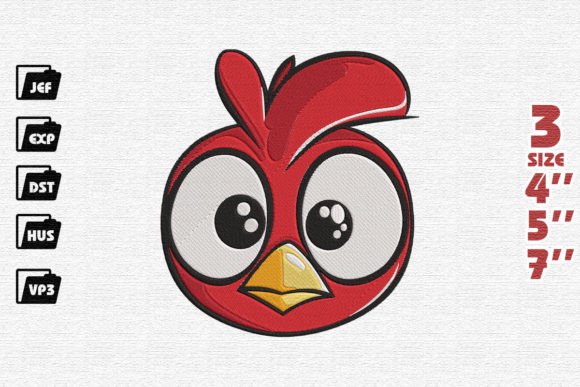
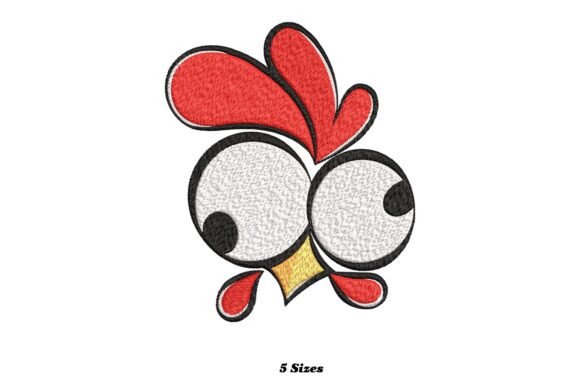
Let’s be honest: when you open Cockeyed Rooster, the first thing that hits you isn’t technical precision—it’s personality. This isn’t a stately cardinal or a serene blue jay. It’s a rooster with one eye tilted just slightly off-kilter, a comb that curls like a cartoon flourish, and a stance that says, “I know I’m ridiculous—and I love it.” As a designer who’s stitched hundreds of bird motifs for Etsy sellers, boutique aprons, and custom baby onesies, I reached for Cockeyed Rooster thinking, *This could be perfect for a playful kitchen towel line—or a total disaster on a fitted cap.* So I tested it.
Real-World Test: A Linen Tote Bag for a Local Bakery
I used Cockeyed Rooster as the centerpiece for a set of 12 linen tote bags—part of a small-batch collaboration with a neighborhood sourdough bakery. The goal? A handmade product that felt warm, whimsical, and unmistakably human—not mass-produced. I chose medium-weight linen (pre-washed, lightly ironed) with tear-away stabilizer underneath and a light cutaway layer on top to support the satin-stitched comb and feather details. On hoop-up, the design flowed cleanly. No nesting issues. No thread breaks in the first run.
What surprised me was how well the exaggerated shape held up at 4.2 inches wide—the size I used for the tote’s front panel. The curved beak, the spiky tail feathers, even the tiny claw details stayed crisp. Customers didn’t just notice it—they pointed. They smiled. One asked, “Is he winking? Or just tired?” That’s the magic of Cockeyed Rooster: it invites interaction. That kind of emotional resonance is gold for craft businesses selling personalized gifts or boutique merchandise.
Where It Shines (and Where It Stumbles)
Cockeyed Rooster thrives where charm outweighs formality:
- Custom apparel—especially on relaxed-fit sweatshirts and organic cotton tees where its bold silhouette reads clearly from three feet away
- Embroidered patch applications, especially when fused onto denim jackets or canvas backpacks (the stitch density holds up beautifully under wear)
- Kitchen towels and tea towels, where its playful energy complements rustic or farmhouse branding
- Baby embroidery on burp cloths or reversible bibs—its friendly exaggeration avoids looking aggressive or overly busy
- Holiday embroidery for Easter or spring collections (think pastel thread on oatmeal linen—soft but spirited)
But don’t assume it’s universally forgiving. I tried it on a lightweight jersey baby onesie—same stabilizer setup—and the fill stitch in the chest area pulled slightly. Not enough to scrap the piece, but enough to make me pause before listing it as “safe for all baby fabrics.” Similarly, on dark fabric, the lighter thread colors in the original file (if included) may need adjustment—always test your thread colors against background contrast, especially for Etsy listings where buyers rely on mockups.
Design Assets That Build Trust—Not Just Cuteness
As an embroidery product reviewer, I look beyond prettiness. Does this machine embroidery design help my clients look professional? Does it scale well across products? Does it hold up after washing? With Cockeyed Rooster, the answer is mostly yes—but with nuance.
The layout is smart: no tiny floating elements, no ultra-thin running stitch lines that vanish on textured fabric. The tail feathers use layered fill stitch rather than delicate backstitch outlines—so they survive tumble drying. And because the motif sits comfortably within a vertical rectangle (no extreme width-to-height ratio), it adapts easily to standard hoop sizes without awkward repositioning.
That said—don’t skip the prep. Always run a test on scrap fabric that matches your final project’s weight, stretch, and texture. Check whether the stitch density feels balanced: too dense, and you’ll get stiffness on soft baby items; too sparse, and the rooster loses its punch on coarse towels. And if you’re using Cockeyed Rooster for commercial embroidery—say, for a local café’s staff aprons—confirm licensing terms before scaling. Some digital embroidery files allow small-batch use only; others require extended licenses for resale.
For the Craft Business Owner: Why This Design Fits Your Shelf
If you sell on Etsy or at craft fairs, you know buyers don’t just buy stitches—they buy story, mood, and intention. Cockeyed Rooster delivers that instantly. It’s not generic. It’s not overused. And unlike many bird embroidery designs, it avoids cliché while still feeling familiar—like a character you’d recognize from a favorite children’s book or vintage poster.
I’ve seen too many small shop products fail because the embroidery looked hesitant or overly cautious. Cockeyed Rooster does the opposite: it anchors a design with confidence. Use it on a pillow cover beside minimalist linen bedding? It adds warmth without clutter. Pair it with hand-lettered “Farm Fresh” on a canvas market bag? It gives the whole piece wit and authenticity.
And for digital product sellers: this is strong design assets material. Include clean black-and-white printable mockups, show it on light and dark fabric swatches, and note recommended thread colors (e.g., burnt orange for the comb, charcoal gray for shadows). Buyers will appreciate those details—especially if they’re new to machine embroidery or building their first craft business.
Final Stitch: Practical Advice Before You Hoop Up
Before launching Cockeyed Rooster into your next embroidery project, ask yourself:
- Have I tested it on fabric that matches my final product’s drape, weight, and stretch?
- Does my stabilizer combo support both the satin-stitched curves and the denser fill areas?
- Will the finished product be washed frequently? If yes, avoid high-sheen threads that may fade or pill.
- Is this for personal use—or part of a craft business, Etsy listing, or wholesale order? Confirm license scope now, not after 50 units are stitched.
- Does the design enhance the item’s purpose? A cockeyed rooster on a formal wedding napkin might misfire—but on a farmer’s market tote? Pure charm.
Cockeyed Rooster isn’t just another bird embroidery file. It’s a mood, a conversation starter, and a quietly strategic design choice—for makers who understand that the best handmade product doesn’t just look good. It feels intentional.